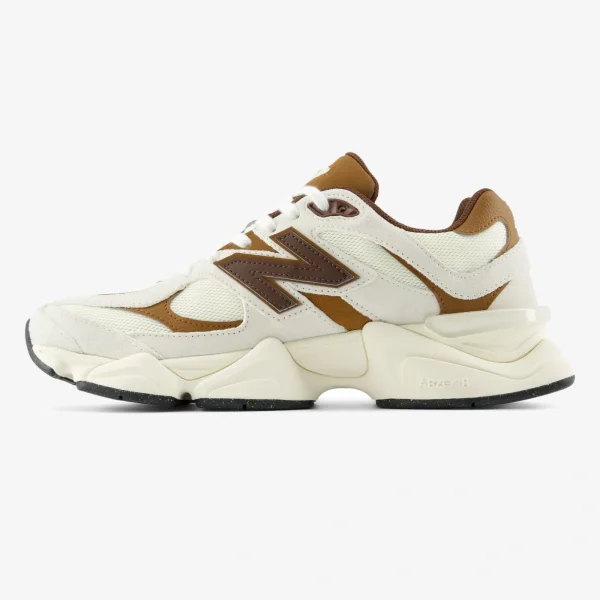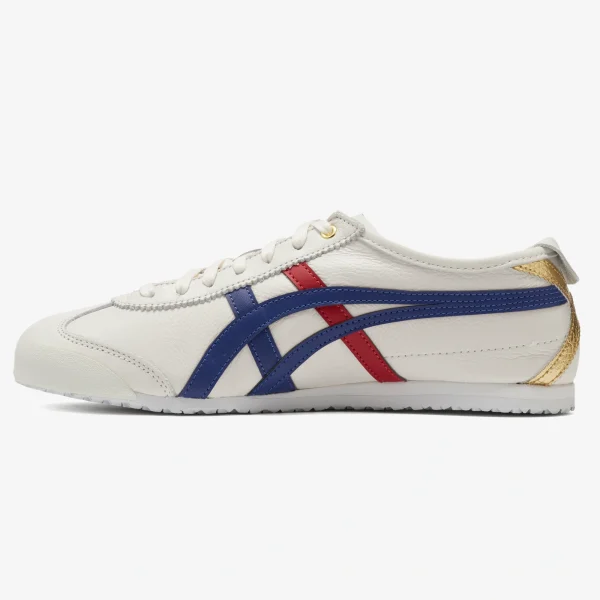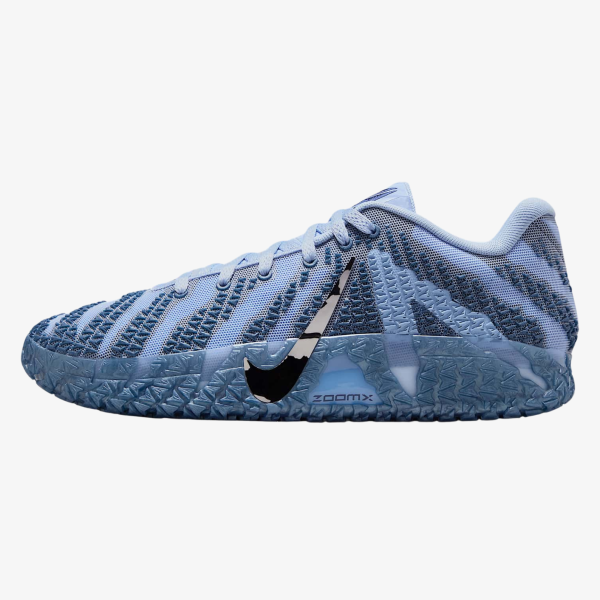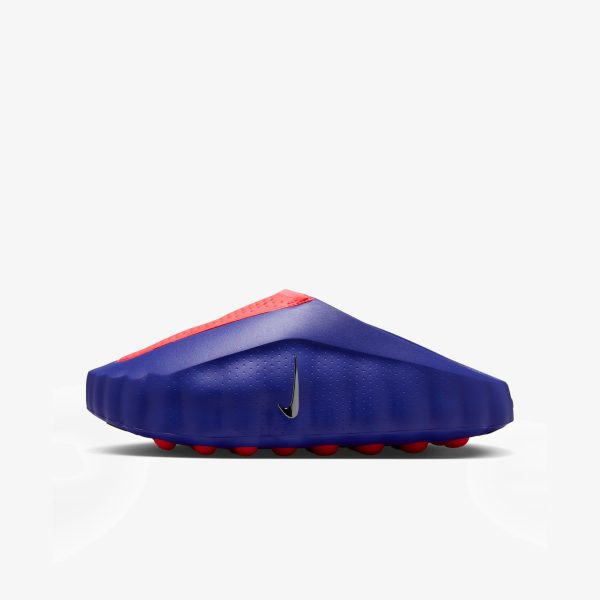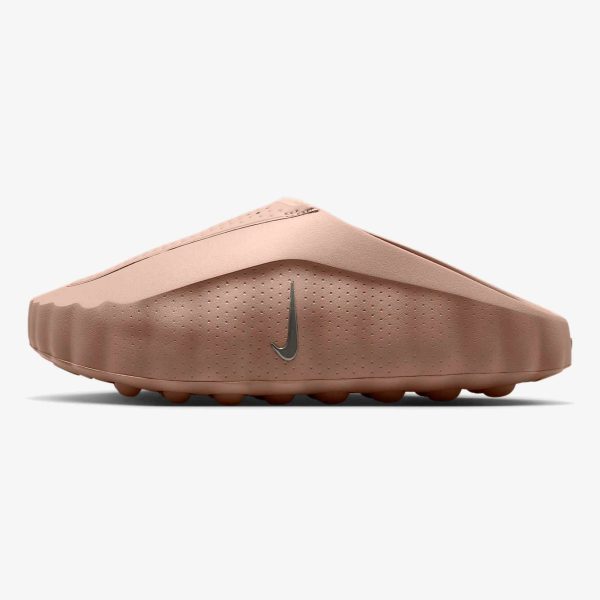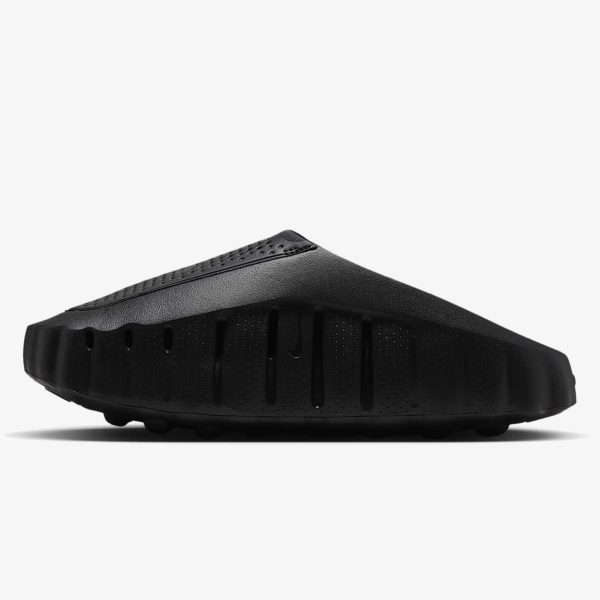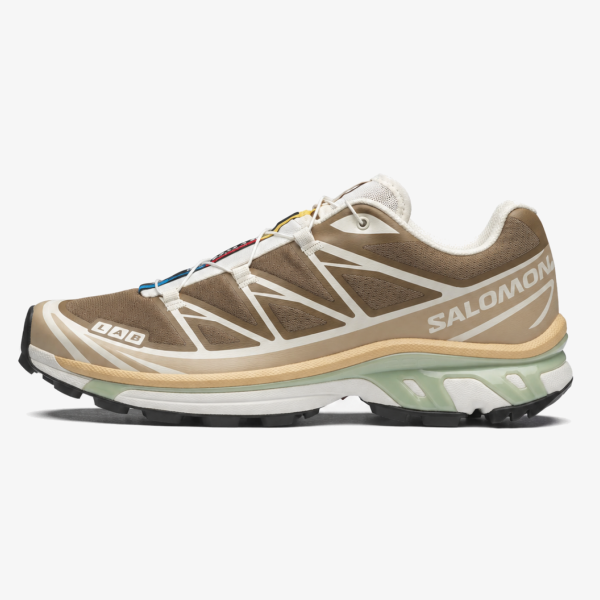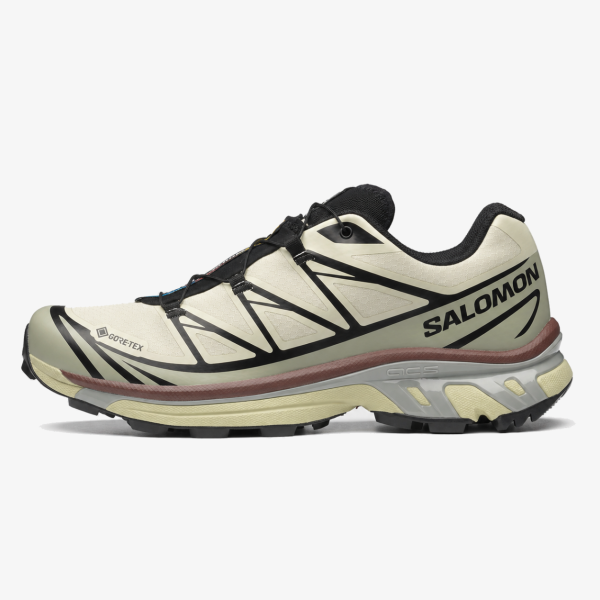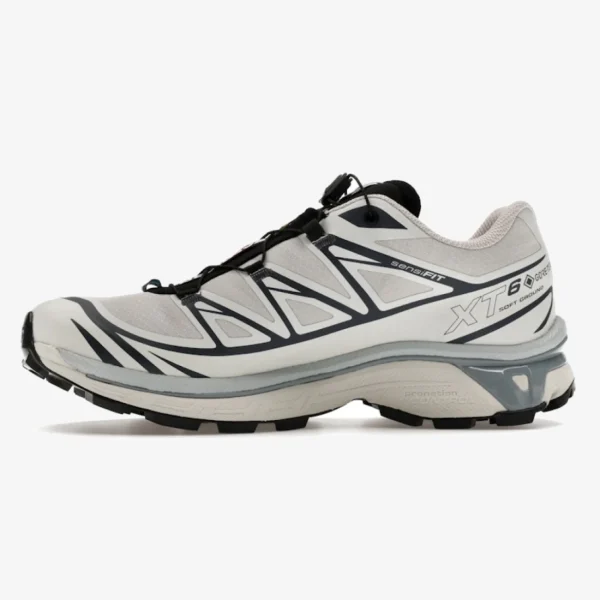

The defining sneaker story of 2026 is a shift toward slim, low-profile silhouettes and tactile, honest materials, with performance runners emerging as the year’s biggest growth category. Expect satin finishes, butter-yellow pops, and suede or pebble-leather textures to dominate visually, while running and performance footwear grew about 8.9% year over year even as lifestyle sneakers cooled. The sneaker market tracks these shifts closely to keep available assortments current.
TL;DR:
- Performance and commuter-style runners grew about 8.9% in 2026, surpassing lifestyle sneakers, which declined roughly 0.9%, indicating a structural shift toward technical footwear.
- Slim, low-profile silhouettes are replacing bulky styles, with demand for court-inspired shapes that hug the foot and are versatile for both casual and dressed-up outfits.
- Tactile, heritage textures like suede, pebbled leather, and satin are in focus, favoring imperfection and durability, especially in earth-tone and textured finishes.
- Bright color pops, metallic accents, and satin finishes serve as seasonal accessories rather than foundational styles, with short-lived trends expected in metallic and bold colors.
- Collaborations favor understated, material-driven designs in satin, suede, and textured leather, emphasizing wearability and practicality over oversized or logo-heavy styles.
Table of Contents
- Top 7 sneaker trends for 2026: what each looks like and how to wear it
- How to shop and style these trends across seasons
- Market signals and sustainability: the data behind 2026’s shifts
- Collaborations with designers and artists shaping 2026 trends
- Regional influences and how sneaker trends differ globally in 2026
- Impact of social media and influencer culture on sneaker trends
- Sneaker customization and personalization trends
- Sneaker resale market trends and their influence on sneaker culture in 2026
- Our quick take on stocking and curation for 2026
- Shop the look: DELTITECH picks that map to 2026 trends
- Sources
- FAQ
Top 7 sneaker trends for 2026: what each looks like and how to wear it
Sneaker culture in 2026 is less about one dominant shoe and more about a set of parallel movements, some built to last, others likely to fade by next season. Here is the ranked rundown.
- Slim and low-profile silhouettes. The bulky, stacked-sole era is losing ground to narrower, low-to-the-ground shapes. Editorial and market coverage points to renewed demand for court and football-derived shapes that hug the foot rather than exaggerate it. Pair a slim white sneaker with cropped trousers or a midi skirt to let the silhouette read as intentional rather than sporty. This looks like a durable shift rather than a passing moment, since it is already reshaping how brands cut soles.
- Ballet-inspired and satin sneakers. Satin finishes and ballet-flat detailing have moved from the runway into everyday sneaker design, with fall 2026 coverage naming satin sneakers a standout for the season. Style them with tailored wide-leg pants or a slip dress for a dressed-up, off-duty look. Treat this one as a seasonal statement piece rather than a daily workhorse, since satin shows wear faster than leather.
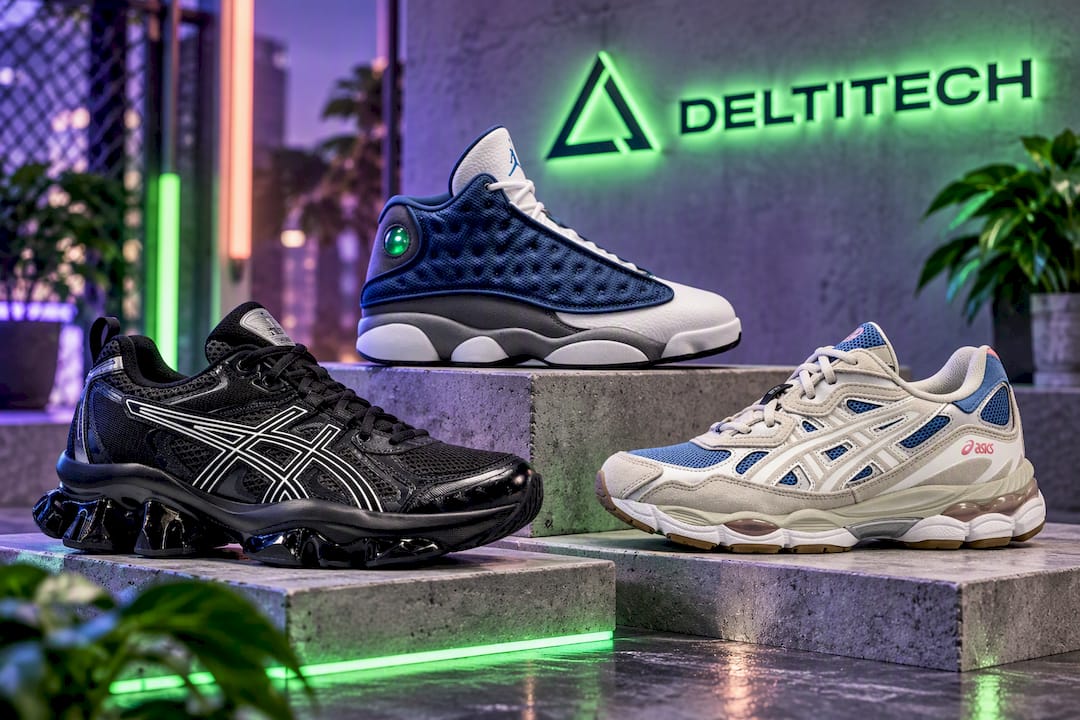
- Performance and commuter-tech runners. This is the category with the numbers behind it. The ASICS Gel Quantum Kinetic ‘Graphite Grey Black’ fits this trend well, offering a cushioned, technical build that reads as athletic without looking like a gym leftover. Wear it with straight-leg jeans and a structured jacket for a commuter look that still performs on a real run.
- Butter-yellow and bold color pops. Bright yellow and other saturated accent colors are showing up across runway and street-style galleries as a way to punch up otherwise neutral outfits. A single yellow sneaker against gray, navy, or black separates does the work without needing a second bold piece. Expect this to cycle out faster than the silhouette or material trends.
- Metallic and high-shine accents. Reflective panels, silver overlays, and glossy finishes are appearing as accents rather than full uppers, giving neutral builds a bit of edge. These work best on a shoe you already wear often, since a small metallic hit refreshes a simple outfit without demanding a styling overhaul.
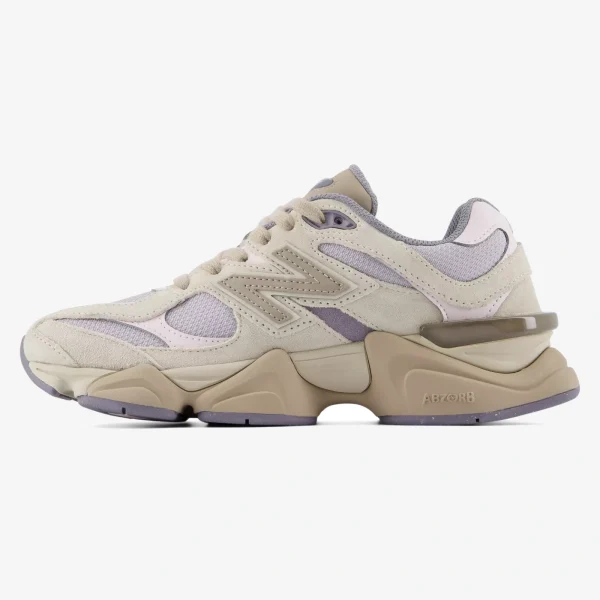
- Textured suede and earth-tone minimalism. Suede, pony hair, and sandblasted or pebbled leather are central to what trend forecasters call a “Raw Renaissance,” a preference for tactile, imperfect surfaces over polished uniformity, as described in the Micam FW26 buyer’s guide. The ASICS Gel NYC ‘Polar Night Cream’ leans into this with a muted, textured build suited to layered fall outfits. This is one of the more lasting directions, since heritage materials tend to outlast color-driven trends.
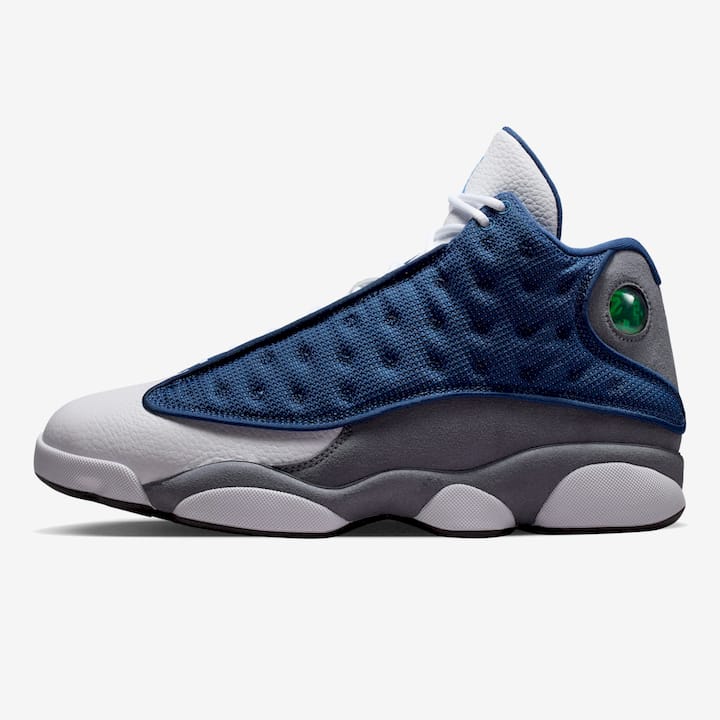
- Retro and football-inspired court silhouettes. Archival basketball and football shapes are back in circulation, often reworked in updated colorways. The Air Jordan 13 Retro ‘Flint’ 2026 is a clear example, a heritage court shape refreshed for the current slim-silhouette mood. These pair naturally with denim and varsity jackets for a look that nods to the past without feeling costume-like.
Some of these, like the slim silhouette and tactile materials, look structural. Others, like the color pops and metallic accents, are best treated as accessories to a wardrobe rather than its foundation.
How to shop and style these trends across seasons
Buying into a trend works better with a few fit and material rules in mind.
- Sizing for slim silhouettes: these often run narrower through the midfoot, so try a half size up if you have a wider foot shape.
- Sole thickness matters: a thinner sole means less shock absorption, so pair slim styles with insoles if you plan to wear them for long stretches on foot.
- Material trade-offs: suede resists creasing but stains easily in rain, satin looks refined but scuffs faster than leather, and pebbled or sandblasted leather hides scuffs well and ages into a better-looking shoe over time.
- Seasonal pairing: in spring and summer, wear satin or butter-yellow sneakers with lightweight linen trousers or a sundress; in fall and winter, lean into suede and earth-tone textures with wool trousers, denim, or a longline coat.
Pro Tip: Keep one neutral performance runner in rotation year-round. It absorbs daily wear that would otherwise shorten the life of your statement pairs.
Before buying, run through a short checklist: does the shoe feel comfortable within the first five minutes of wear, does it work with at least three outfits already in your closet, is the material realistic for your climate, and does the build quality suggest it will hold up past one season.
Market signals and sustainability: the data behind 2026’s shifts
The trend list above is not just aesthetic guesswork. Transaction and search data show running and performance footwear growing while lifestyle sneakers softened, a signal that the “commuter tech” aesthetic is backed by real purchasing behavior, not just runway buzz.
Running and performance footwear grew about 8.9% year over year in 2026, even as lifestyle footwear declined roughly 0.9%, according to Trendalytics. That gap suggests the shift toward technical, neutral runners is structural rather than seasonal.
On materials, the Micam FW26 buyer’s guide frames the season as a “Raw Renaissance,” favoring tactile, heritage textures over polished perfection.
Raw Renaissance favors tactile, heritage materials and irregular surfaces over polished perfection.
On sustainability, the Circular Fashion Index finds that circularity is becoming a baseline expectation, yet only a small share of brands, 3 to 7%, implement extensive circular design. Shoppers skeptical of vague “recycled” claims should look for concrete features like modular soles or explicit repairability statements rather than marketing language alone.
Collaborations with designers and artists shaping 2026 trends
Designer and artist collaborations remain one of the fastest ways a silhouette moves from niche to mainstream. In 2026, these partnerships tend to lean into the same material story driving the rest of the market: tactile finishes, muted colorways, and slimmer builds rather than the oversized, logo-heavy drops that defined earlier collaboration cycles.
Fashion-house tie-ins increasingly borrow from archival sportswear shapes, reworking them in satin, suede, or brushed leather instead of standard mesh or canvas. Artist collaborations, meanwhile, tend to show up as limited color and print treatments on otherwise classic silhouettes rather than as entirely new shapes, a reflection of the broader consumer pull toward recognizable, wearable design over experimental one-offs.
For shoppers, this means a collaboration sneaker in 2026 is more likely to work into a daily rotation than sit on a shelf. The practical takeaway: when evaluating a collaboration release, judge it on whether the material and silhouette choices match what you would already wear, not just on the name attached to the box.
Regional influences and how sneaker trends differ globally in 2026
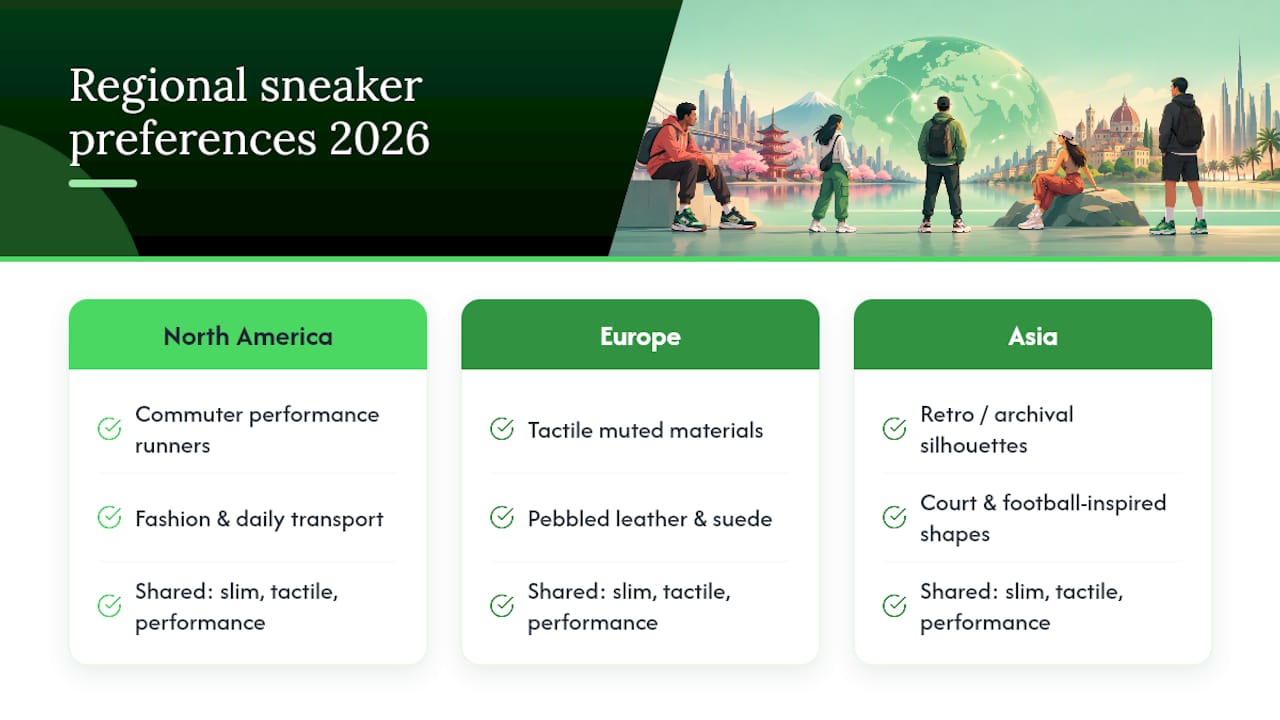
Sneaker preferences are not identical from one region to the next, even when the underlying materials and silhouette shifts are shared. In North America, the pull toward commuter-style performance runners tracks closely with the sell-through data on running footwear, reflecting a market where sneakers double as both fashion and daily transportation footwear.
European markets, particularly those covered in trade analysis around fall and winter collections, lean harder into the tactile, muted material story, with pebbled leather, suede, and monochrome utility builds appearing frequently in trade coverage of the season. Asian markets have historically moved faster on retro and archival silhouettes, and that pattern continues into 2026, as court and football-inspired shapes see renewed circulation.
None of this means the trends are separate. A slim silhouette or a suede texture reads the same whether it shows up in a New York commuter outfit or a European trade show, but the pace of adoption and the specific colorways favored can shift by region. For a global shopper, the practical note is to treat the big three (slim shapes, tactile materials, performance growth) as the shared throughline, and treat color and collaboration specifics as more locally driven.
Impact of social media and influencer culture on sneaker trends
Social platforms continue to compress the gap between runway and retail. A satin sneaker or a butter-yellow colorway spotted in editorial coverage can show up in street-style posts within days, and that visibility accelerates demand faster than a traditional seasonal rollout ever did.
This speed cuts both ways. It helps a genuinely well-made trend, like the slim silhouette shift, gain traction quickly because enough people are wearing it in enough contexts to normalize it. It also means micro-trends, like a specific metallic accent or a single bold color pop, can peak and fade within a single season, since the same platforms that popularize a look also move on to the next one just as fast.
For shoppers, the practical filter is simple: if a style keeps appearing across unrelated sources, editorial coverage, trade analysis, and everyday street style, it is more likely to have staying power. If it only shows up in a narrow influencer circle, it is worth treating as a short-term buy rather than a wardrobe investment.
Sneaker customization and personalization trends
Customization has moved from a niche hobby into a mainstream expectation, particularly among sneaker enthusiasts who want a shoe that reads as personal rather than mass-produced. This shows up in a few forms: brand-run customization programs that let buyers choose colorways or materials, aftermarket dyeing and painting services, and simple swaps like laces or insoles that change a shoe’s character without altering its core build.
The material trends shaping 2026, tactile suede, satin, and textured leather, lend themselves well to customization, since these surfaces often take dye, paint, or embellishment more visibly than smooth synthetic uppers. A slim silhouette in a neutral colorway is also an easier canvas for personalization than a heavily branded, multi-panel shoe.
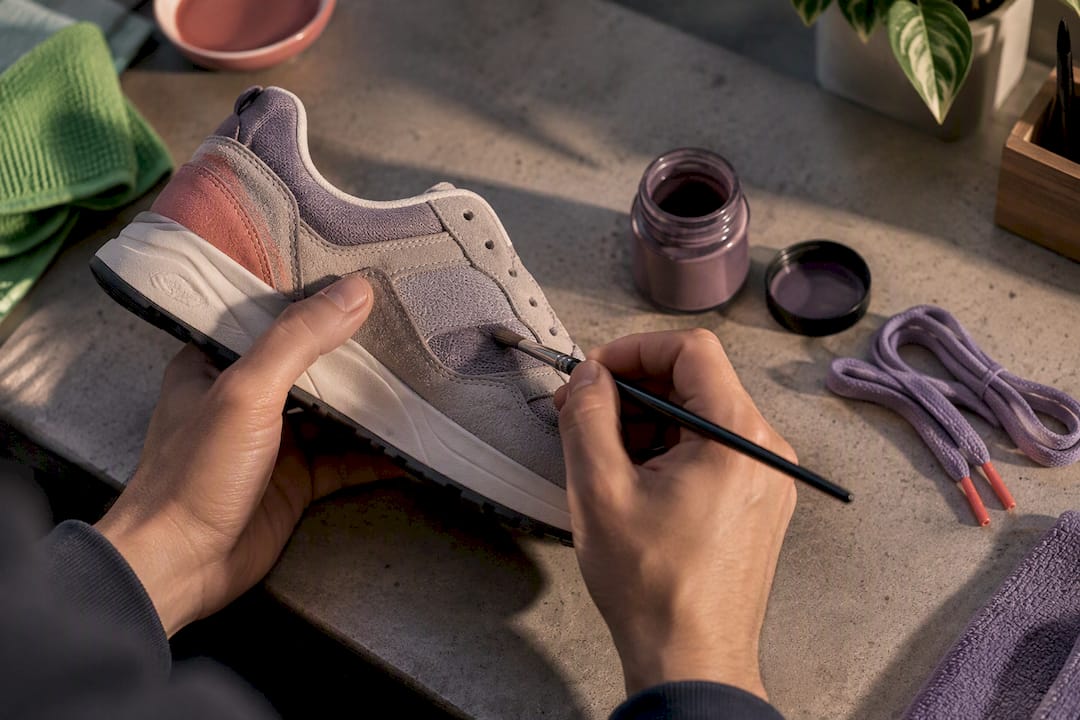
For anyone interested in personalizing a pair, the safest approach is to start with a versatile base, a neutral runner or a classic court shape, rather than a limited colorway you might want to preserve in its original state.
Sneaker resale market trends and their influence on sneaker culture in 2026
Resale culture continues to shape which sneakers get attention long before they reach a store shelf. Limited retro releases and collaboration drops remain the pairs most likely to see resale demand, and that anticipation often drives early interest in a silhouette before it fully hits the broader retail market.
That said, the resale conversation in 2026 sits alongside a market that increasingly favors fixed, transparent pricing over bidding and markup. Buyers frustrated by resale premiums or uncertain authenticity are part of why demand has grown for retailers offering new, authentic pairs at a set price. The resale market still shapes hype and cultural relevance, particularly for retro court shapes like the Air Jordan 13 Retro ‘Flint’ 2026, but it is no longer the only path to owning a wanted style.
Our quick take on stocking and curation for 2026
Market demand signals echo the wider data: performance runners and slim, tactile silhouettes are pulling ahead of chunkier lifestyle shapes. This trend influences how sneaker assortments are rounded out in various markets, with many authentic styles kept in rotation to ensure the styles gaining traction remain easy to find.
— DELTITECH
Shop the look: DELTITECH picks that map to 2026 trends
Each of the season’s core trends has a clear match in our current lineup. The ASICS Gel Quantum Kinetic ‘Graphite Grey Black’ covers the performance runner trend, built for the commuter-tech look driving this year’s biggest growth category. The Air Jordan 13 Retro ‘Flint’ 2026 answers the retro court silhouette trend, reworked for the slimmer mood defining 2026. The ASICS Gel NYC ‘Polar Night Cream’ brings the textured, earth-tone minimalism at the center of this year’s material shift.
- Browse Nike and Adidas for more slim and performance shapes.
- Check New Balance and Air Jordan for retro and court silhouettes.
- See the full ASICS range for the tactile, textured builds covered above.
All three picks are sold new and authentic at fixed prices and with free express shipping.
Sources
- Footwear trends 2026: top styles, data & retail insights (Trendalytics)
- BUYER’S GUIDE FW26 trends & must-haves (Micam)
- Kearney releases the Circular Fashion Index 2026 (PR Newswire)
- Satin shoes: the prettiest trend of fall 2026 (WhoWhatWear)
FAQ
Which shoe style is trending for 2026?
Slim, low-profile silhouettes are the defining shape for 2026, replacing the bulkier styles of prior seasons. Tactile materials like suede and satin, along with performance runners, round out the year’s main directions.
What are the top sneakers coming out in 2026?
Standouts include the Air Jordan 13 Retro ‘Flint’ 2026 for retro court shapes, the ASICS Gel Quantum Kinetic ‘Graphite Grey Black’ for the performance runner trend, and the ASICS Gel NYC ‘Polar Night Cream’ for textured, earth-tone minimalism.
What is the hottest sneaker out right now?
Performance and commuter-style runners are the fastest-moving category, with running footwear growing about 8.9% year over year while lifestyle sneakers cooled. Retro court silhouettes like the Air Jordan 13 Retro ‘Flint’ 2026 are also drawing strong attention this season.
What are the women’s sneakers in style for 2026?
Ballet-inspired and satin sneakers are a major direction for women’s styles this year, appearing across fall 2026 runway and street coverage. Slim silhouettes and butter-yellow color pops are also popular, often styled with midi skirts or tailored trousers.